
The house front
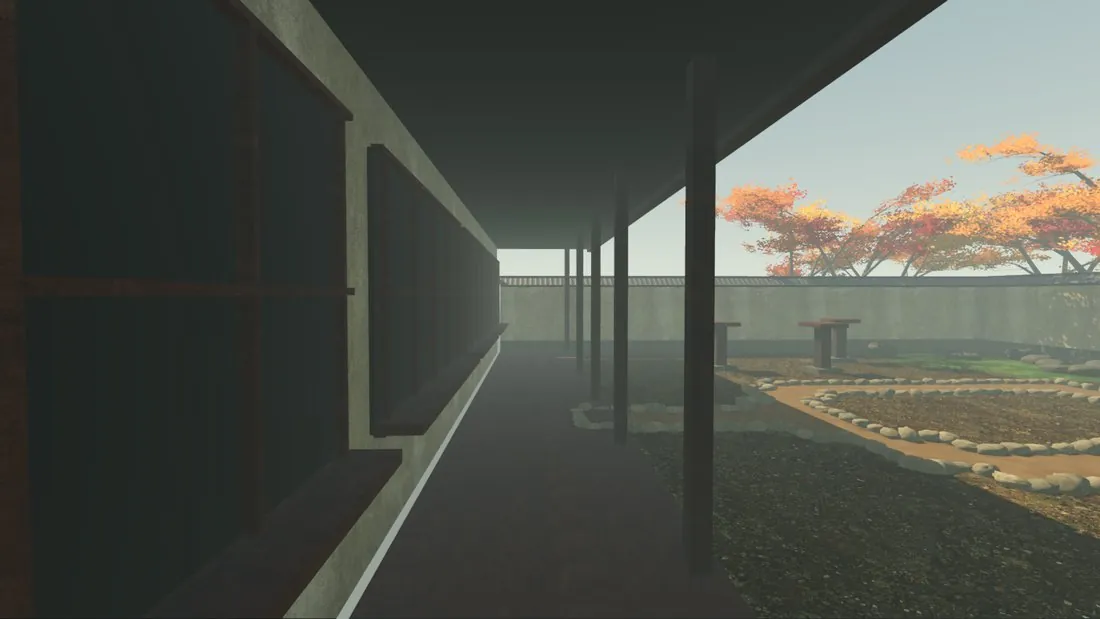
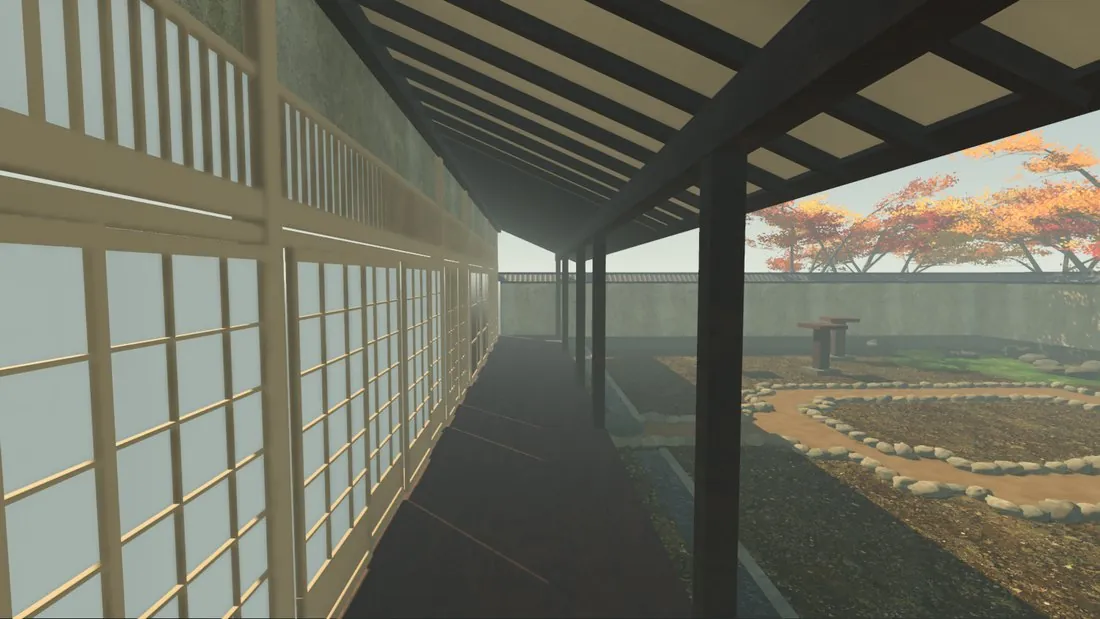
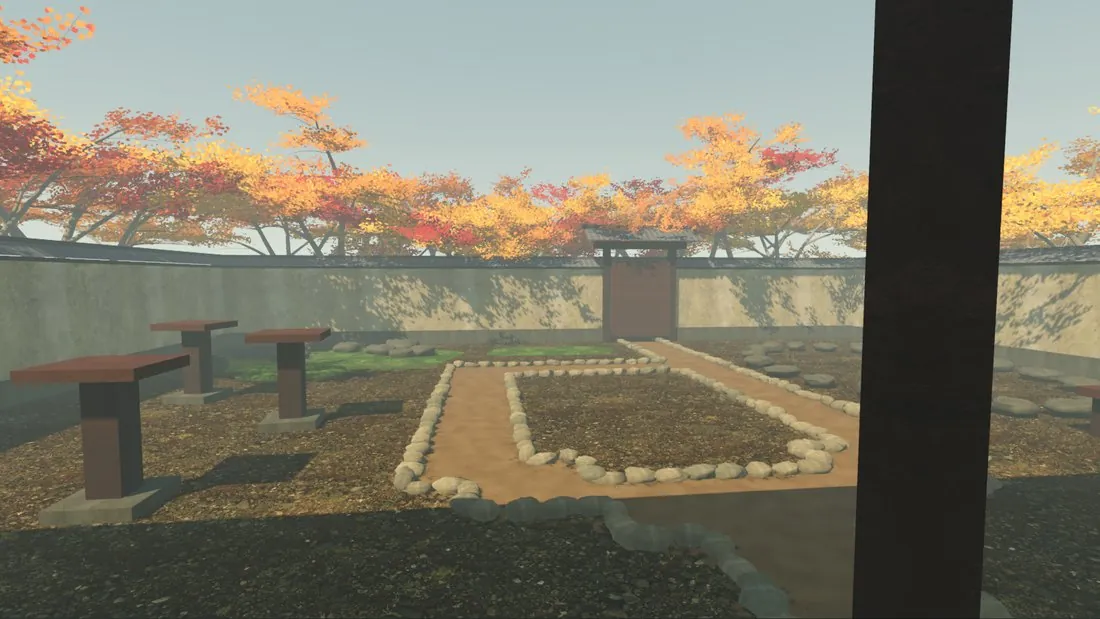
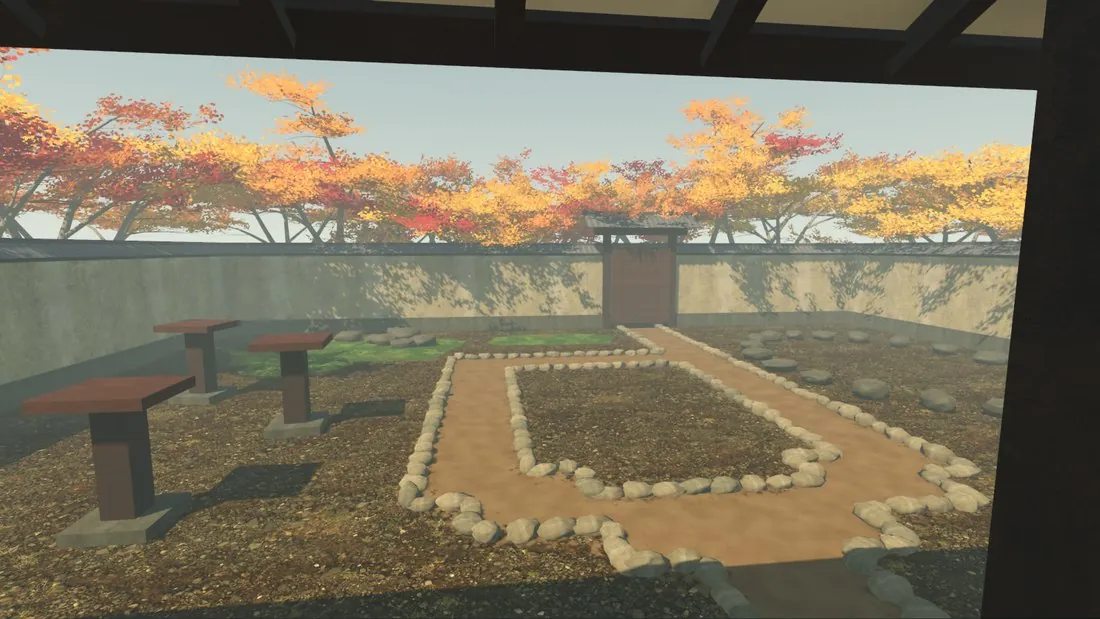
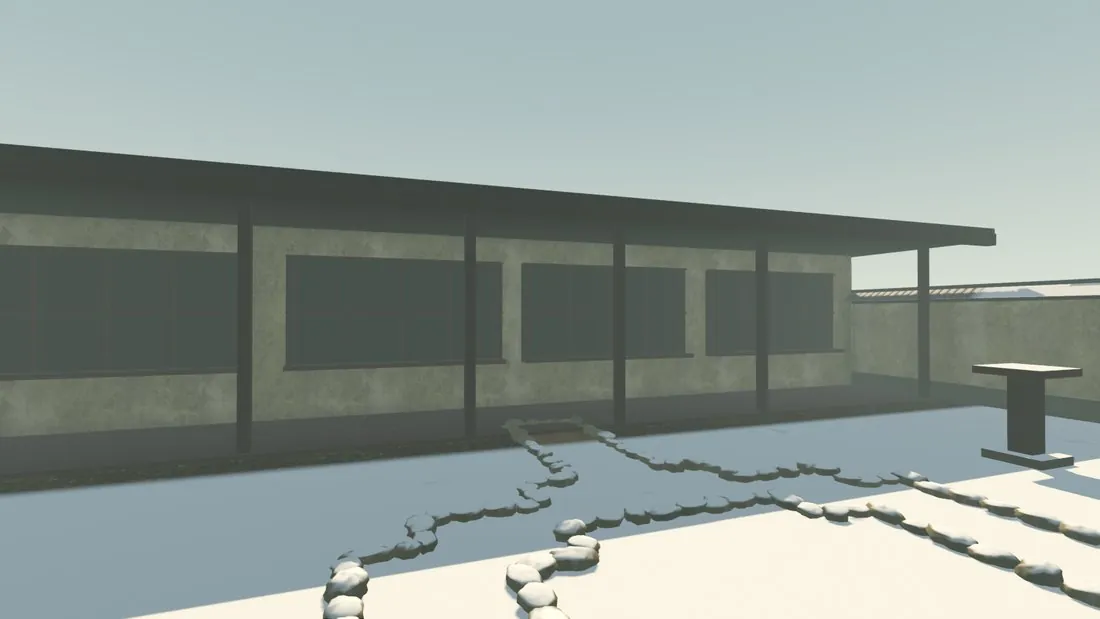
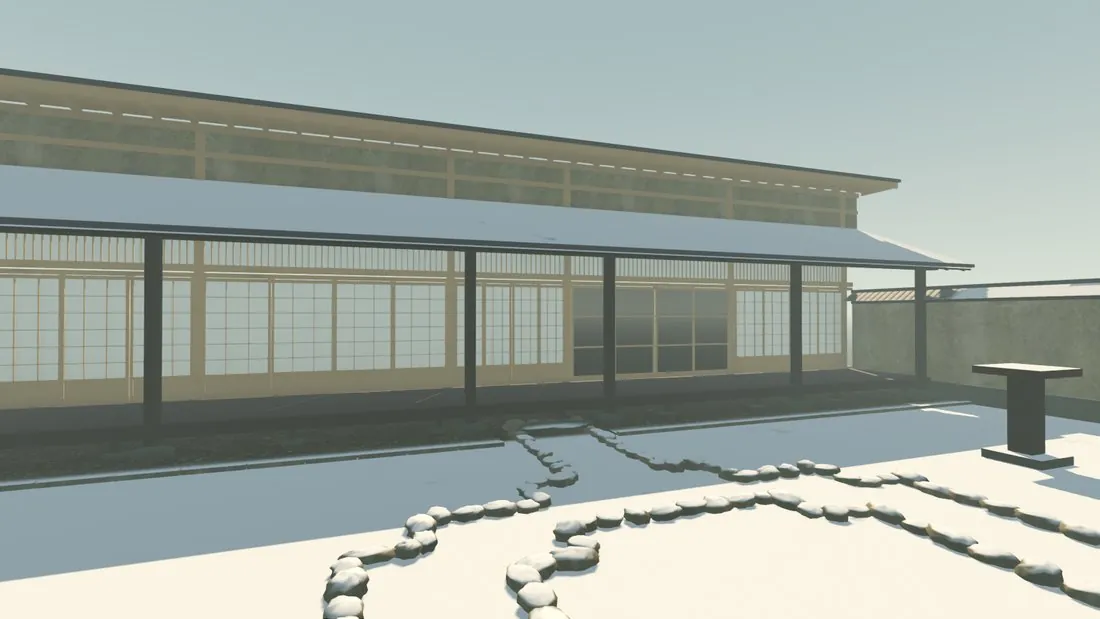
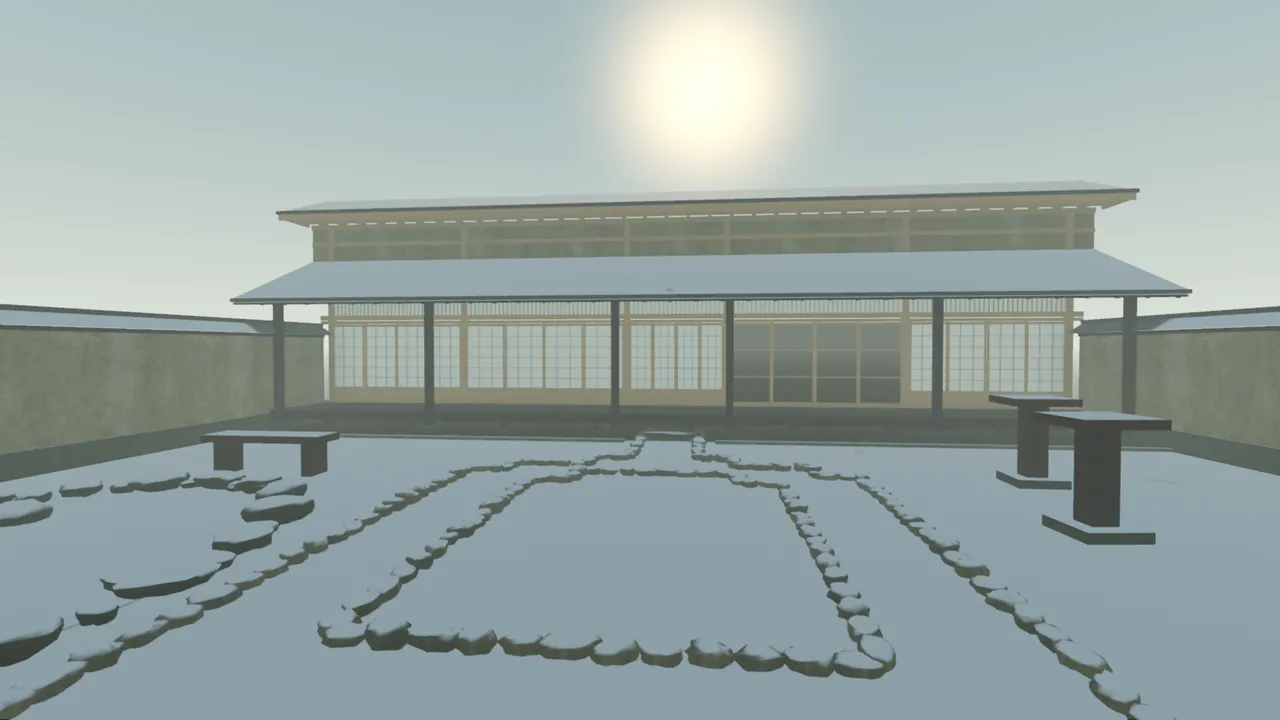
The courtyard's house side was the last placeholder in its frame: planks on the ground, six square posts under a flat slab, and a plaster wall with four dark windows. It is now the side of a Japanese house that meets its garden, built from the temple garden's materials.
A veranda (engawa) stands 40 cm up, as a house floor does, its boards laid lengthwise on short posts and stones, with a flat stone where the path arrives. Posts on foundation stones carry the eaves: rafters run out past the posts under a lean-to of the walls' grey tiles, and a drip line of dark pebbles lies under the eaves' edge. Along the house are sliding paper screens (shoji) in every bay, glass doors where the grow room looks out, a lattice over them, and above the lean-to the upper wall and the main roof's eaves.
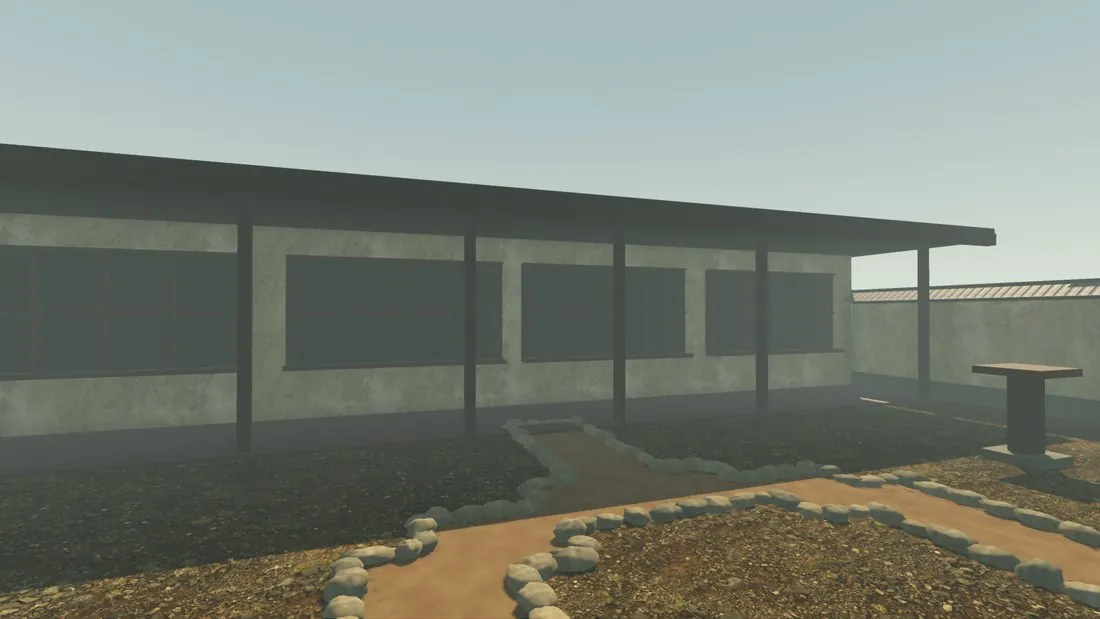
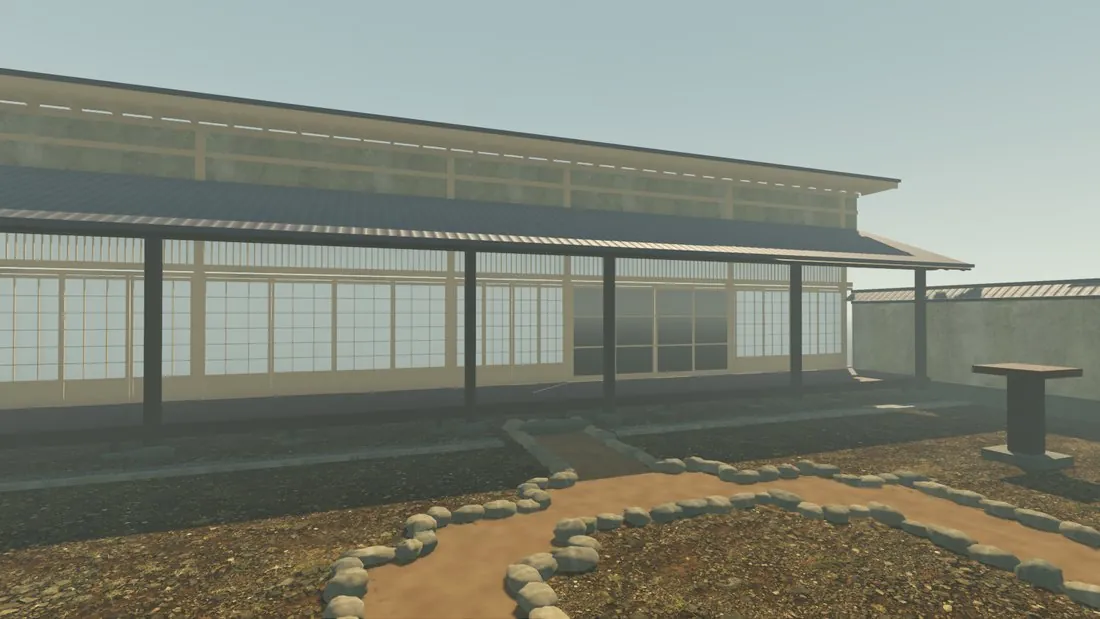
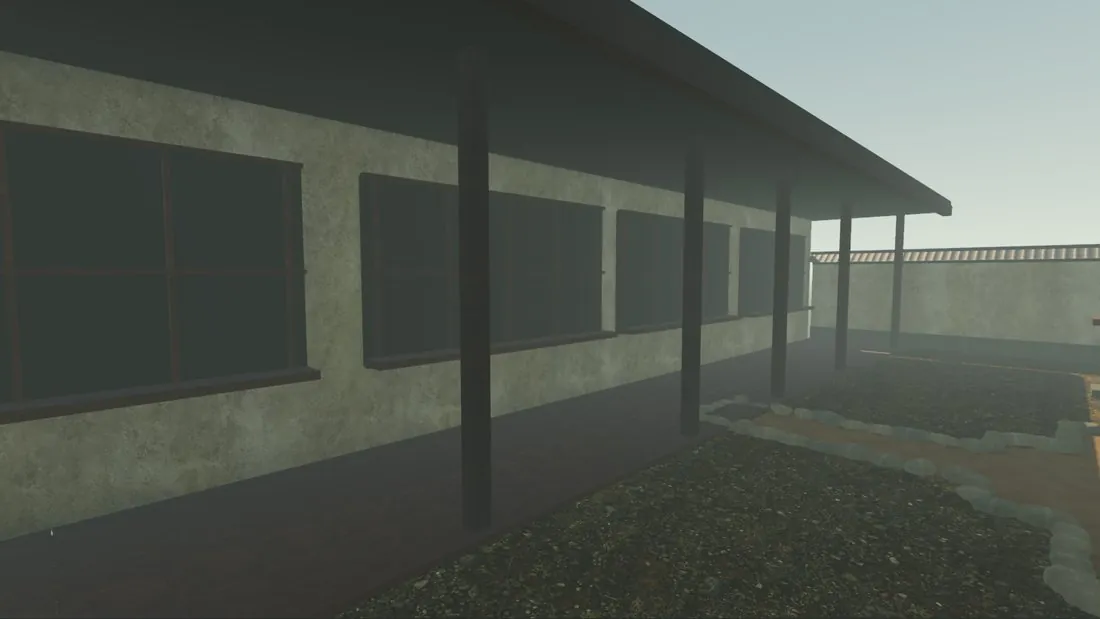
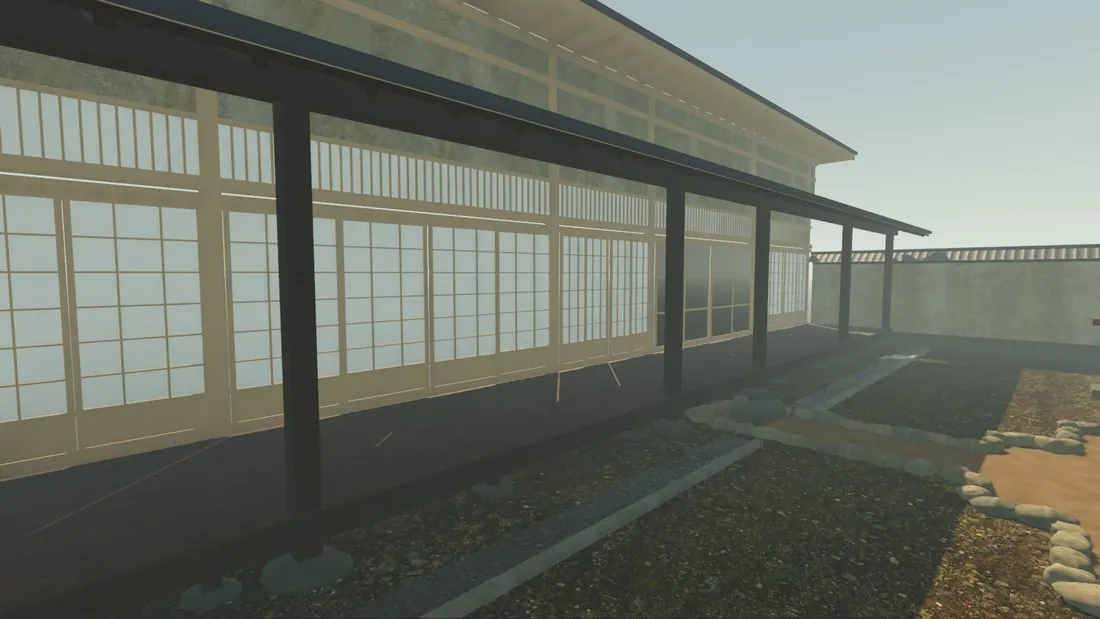
You step up onto the veranda anywhere along its edge over a slope you never see, and arriving through the grow-room window now puts you on it. The posts stand clear of that window's view. On the review this was "Right direction: carry on".
On the veranda
Along the veranda, out from it, and in January, when snow lies on the lean-to's tiles but not under them.
The bark that stayed on the deadwood
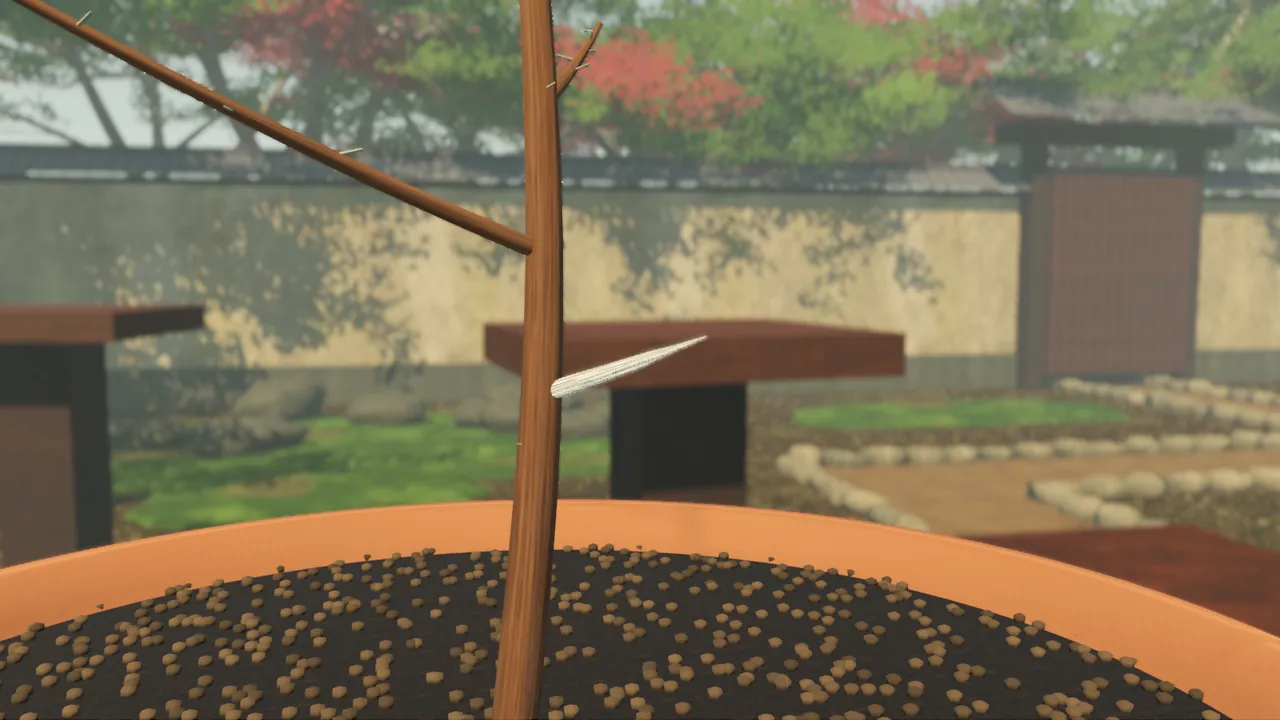
A screenshot sent during the review asked two questions about a jin, a branch stripped to bare wood as deadwood: "what is that brown thing around the deadwood" and "i don't know why the deadwood is forming a point at the end". A study made the same jin on the nursery juniper and turned the drawing layers off one at a time.
The brown was the branch collar: the sleeve of trunk bark the game wraps round every branch's base so the branch grows out of the trunk. Stripping a jin never took it off. Under it, a rule kept the first 12 % of a stub as bark even when nothing on the stub was alive, and on a stub that had died, the roll of new trunk wood drawn round its base showed through the dead wood as dark marks.
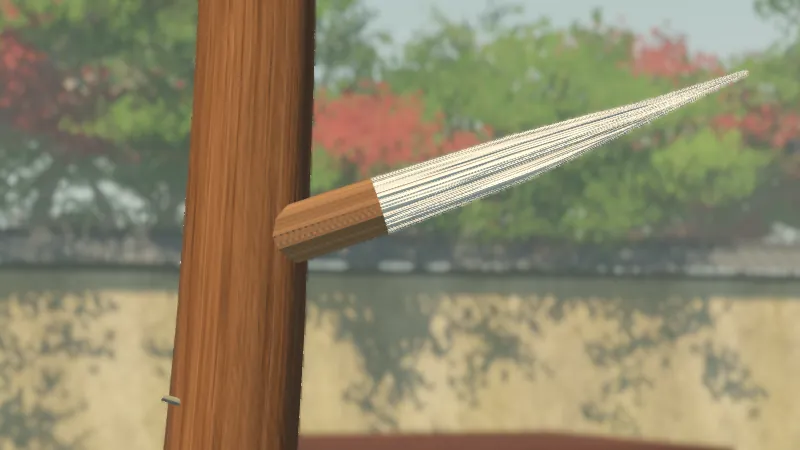
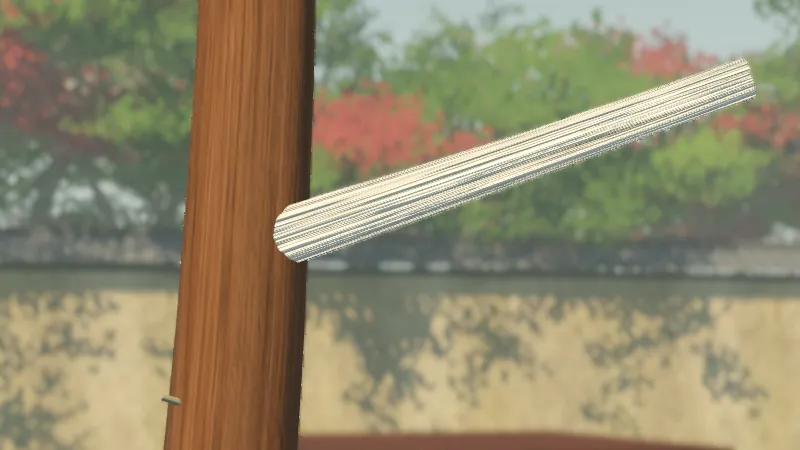
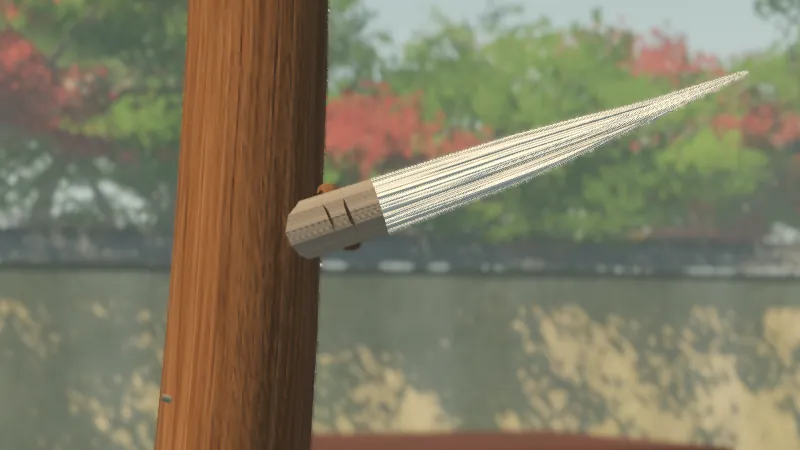
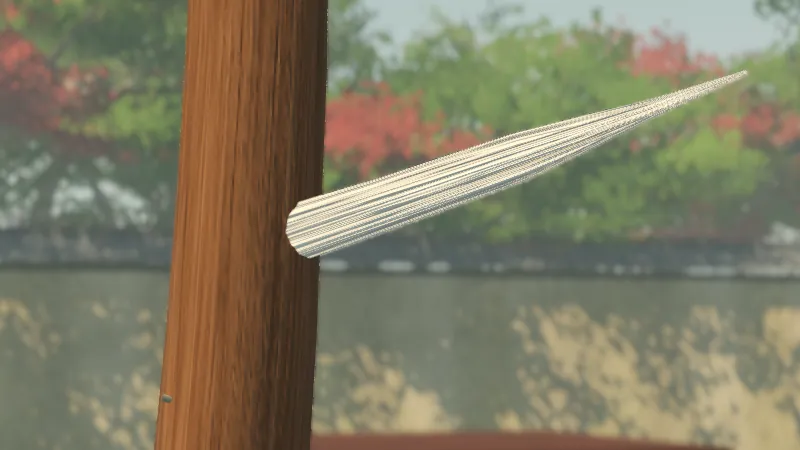
The answer on the review was to strip it, so the bark ends where the jin begins. The collar's sleeve now stops where the stripping starts, a stub with nothing living on it is stripped to the trunk, and no roll is drawn where deadwood meets the trunk. A stub that dies back into deadwood on its own follows the same rules, which is most likely what the screenshot showed.
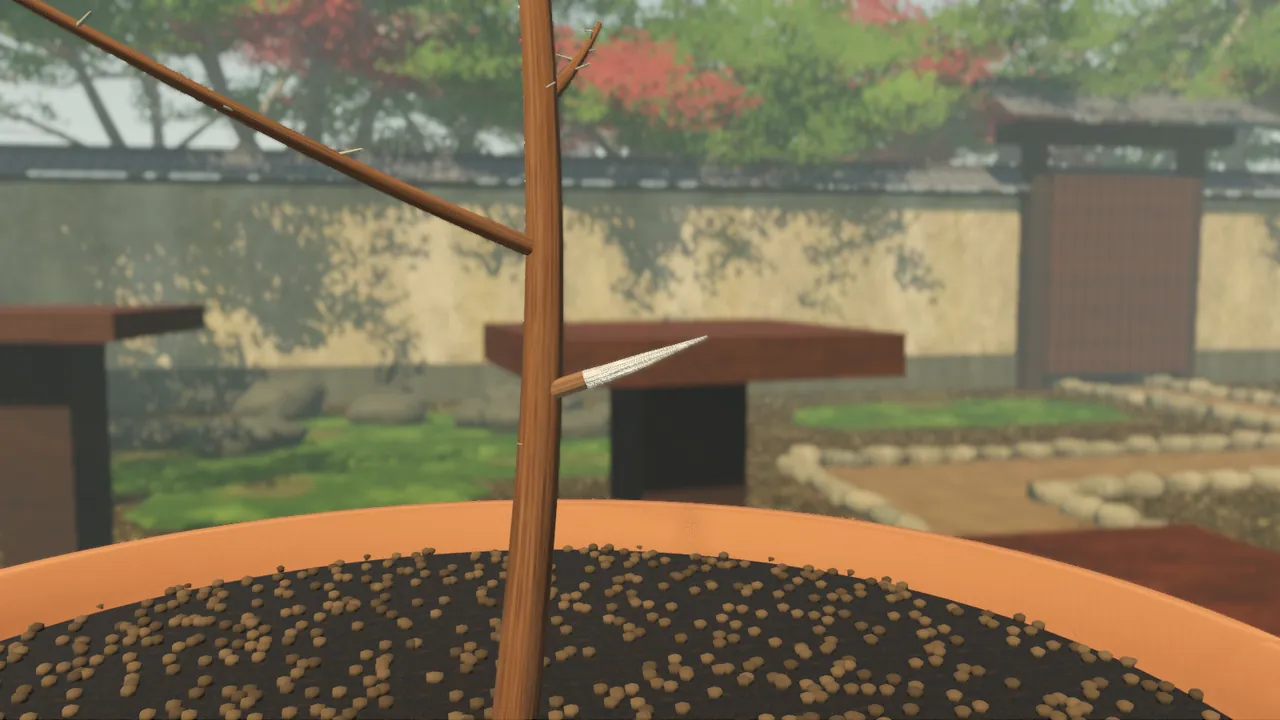
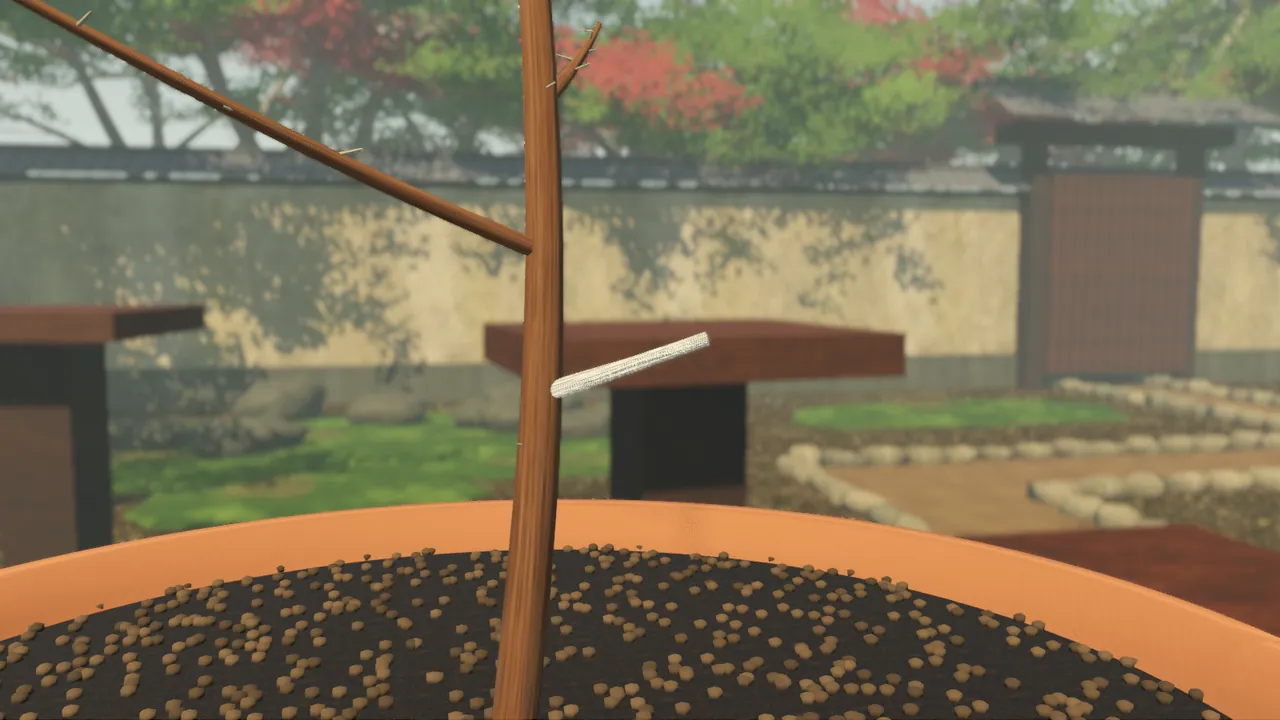
A cut end until you tear it
The point was deliberate but came at the wrong time: the jin's shape tore itself to a splinter the moment the bark came off, even on a stub the cutters had cut flat. Growers make that point on purpose, tearing the fibres back with jin pliers. A fresh jin now keeps the end the cutters left, and pressing Y on a jin tears its tip back to a point (Ctrl+Z takes it back).
A dry pond
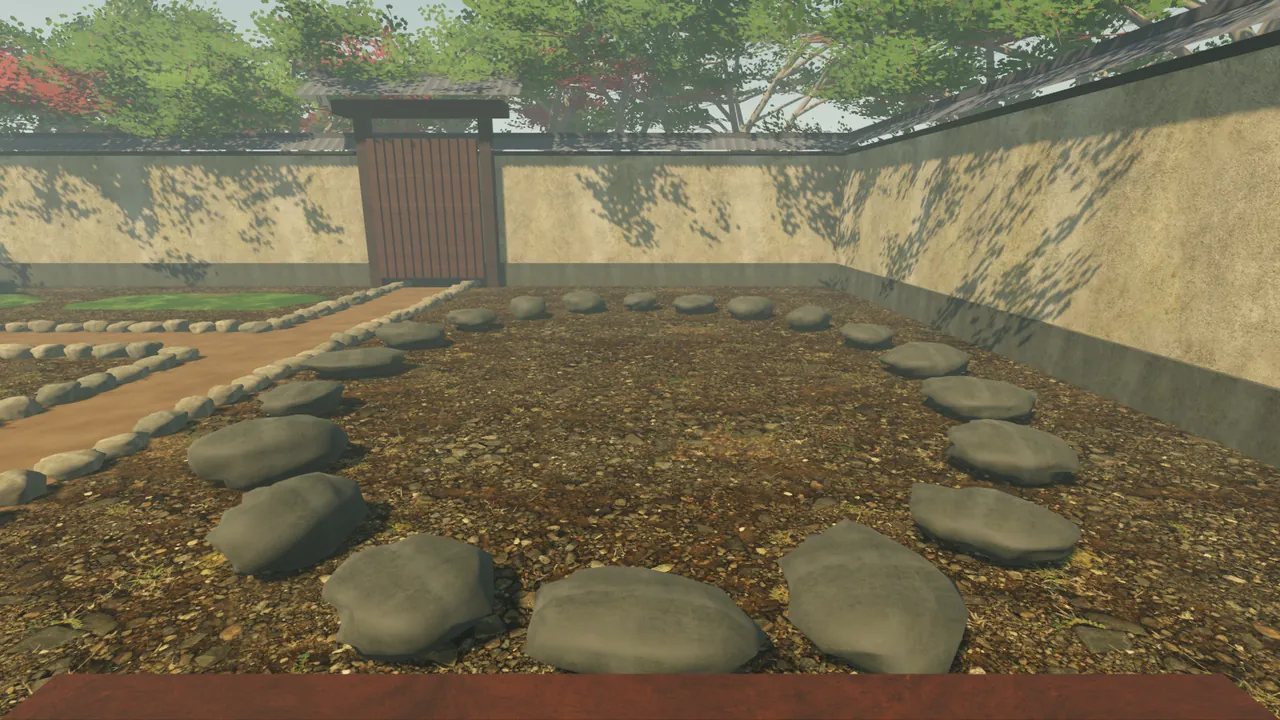
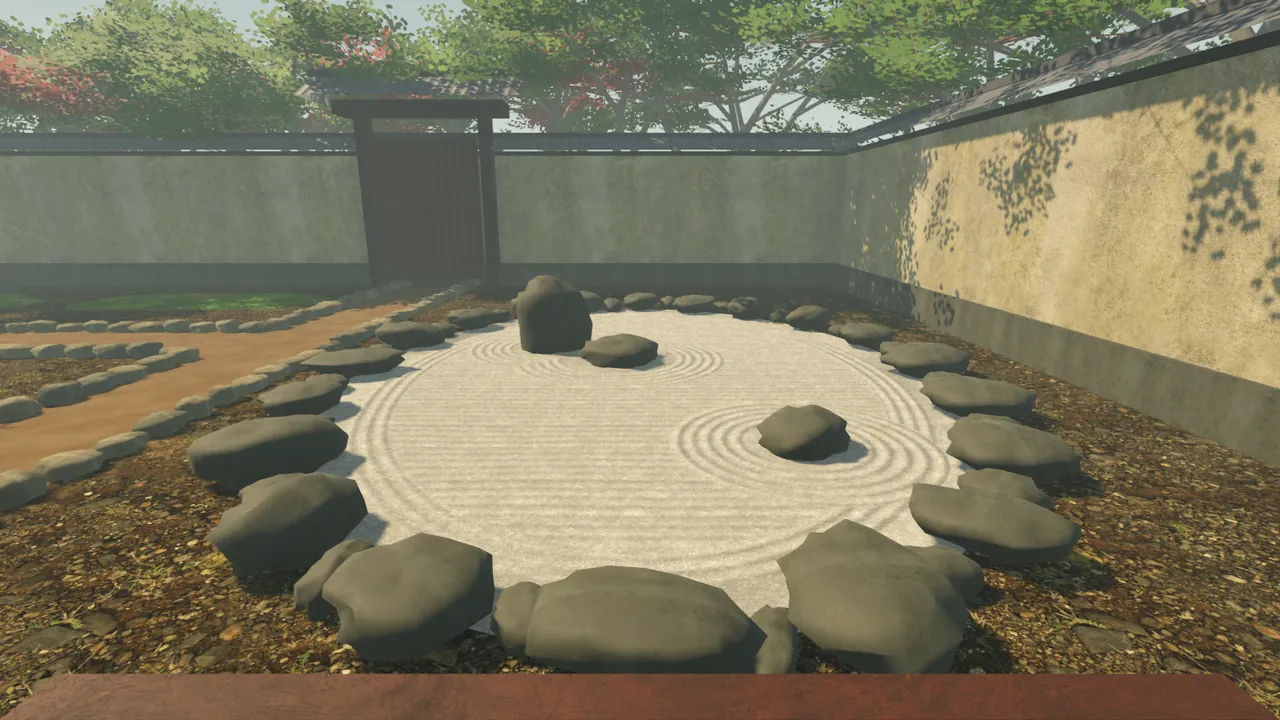
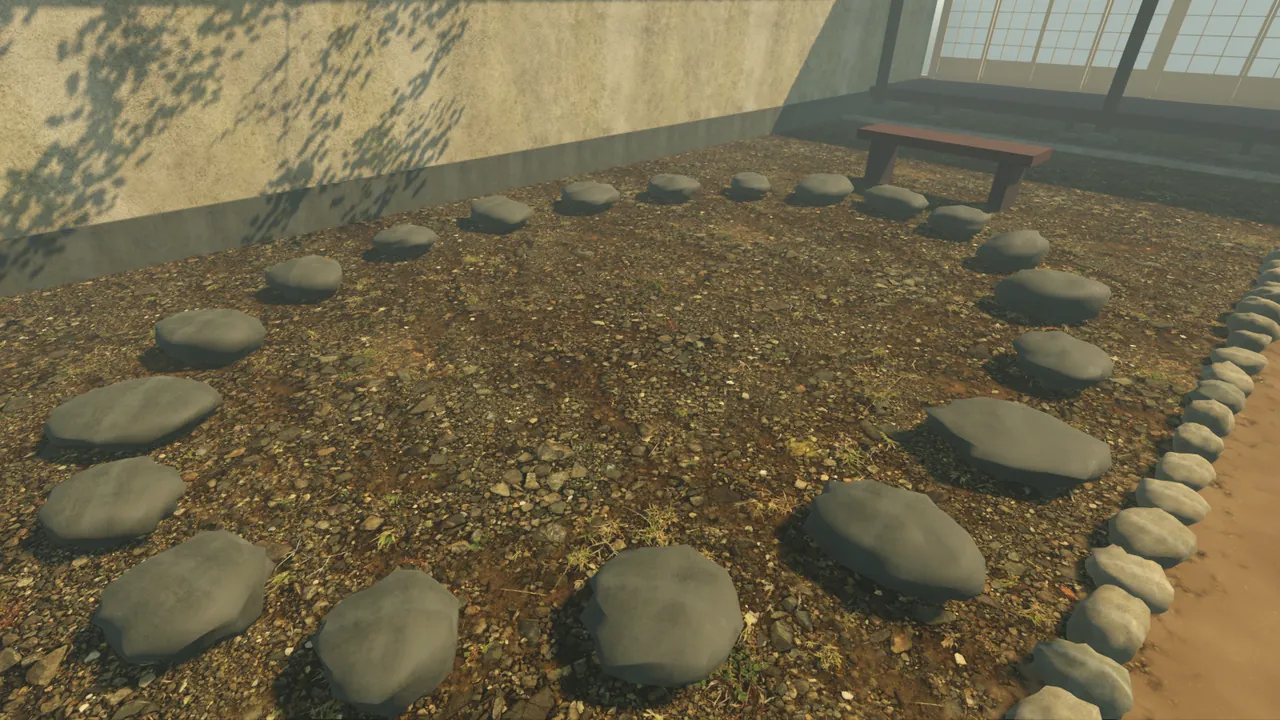
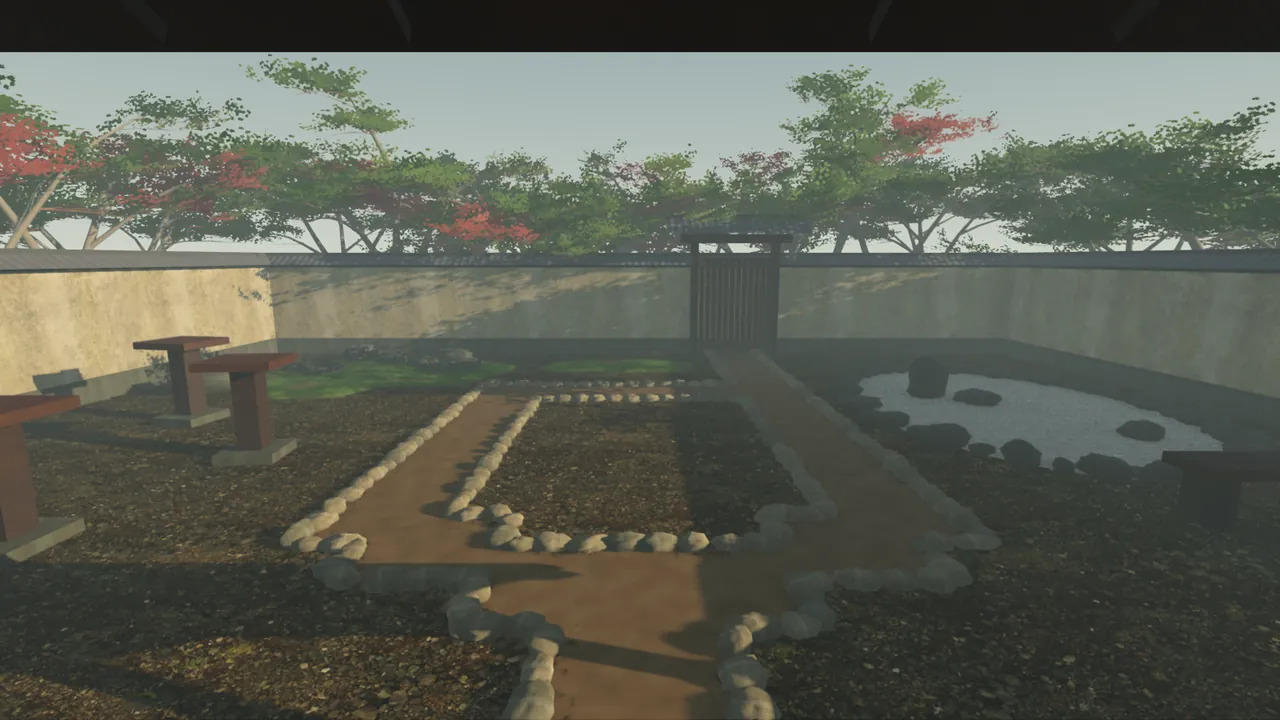
The pond pocket on the courtyard's right was a ring of twenty stones on the gravel, and nothing from the paths said what it was for. Water is not part of the Early Access courtyard, and the game draws no water it does not simulate, so the pocket is now what a temple garden makes of water without any: a dry pond (kare-ike).
Pale crushed granite lies inside the shore stones, raked in ridges 7.5 cm apart: straight lines across the bed, square to the view from the house and the viewing bench, the first three lines following the shore, and rings round the island stones (a standing stone with a low one beside it, and a lone stone towards the bench). Twenty smaller stones close the gaps in the shore. The ridges fade out where a pixel would hold half a line, so from the veranda the raking reads as plain pale gravel instead of shimmering.
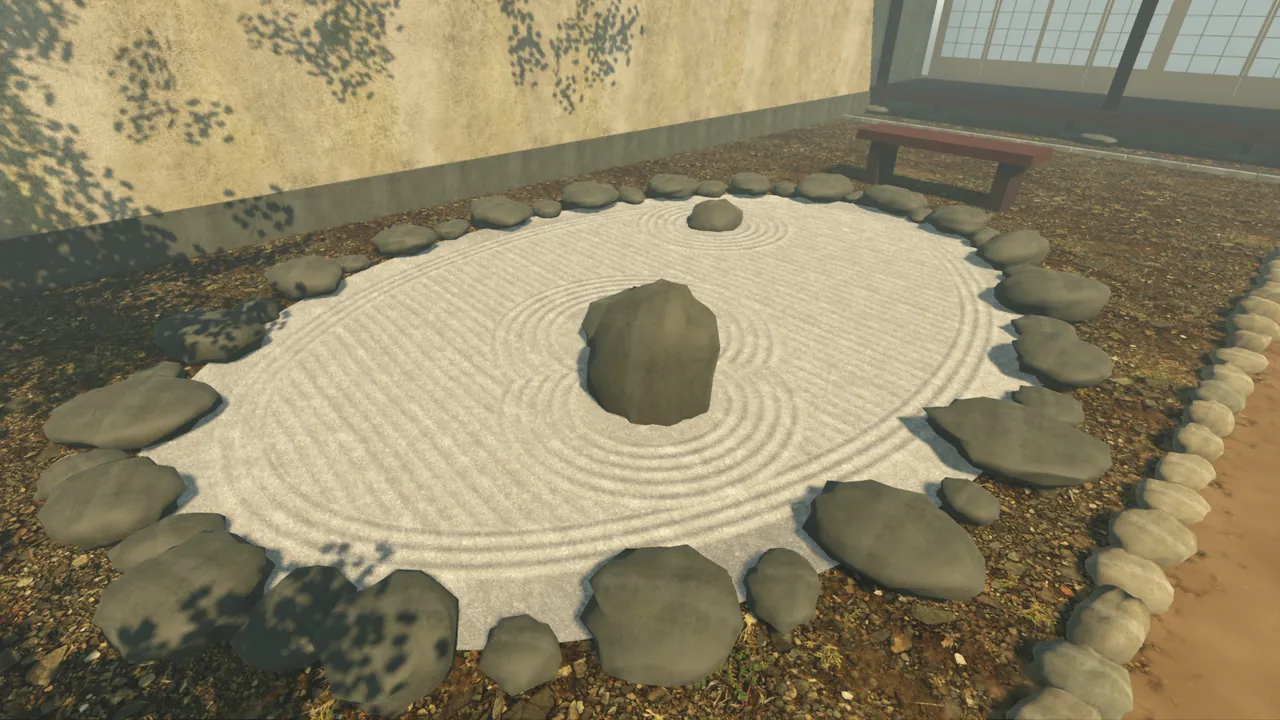
Kept clear
Nothing can be placed or painted on the raking. A path painted up to the pond stops at its stones and lays no edging on the gravel, and you walk round the pond, not over it. In winter it takes the snow like everything else. The pocket stays the place a real pond would go after launch. On the review: "Right direction: carry on".
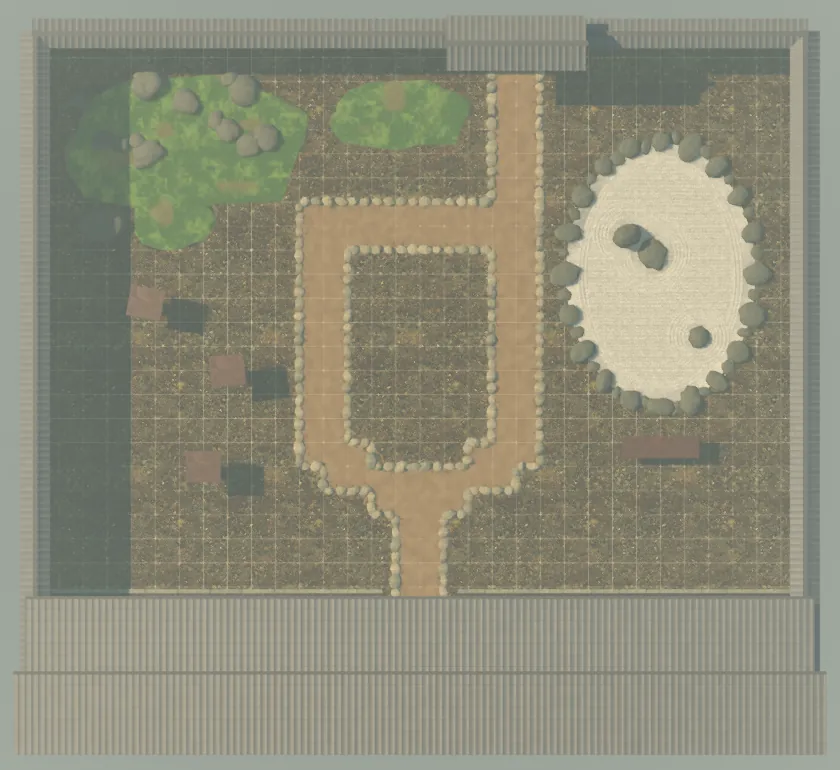
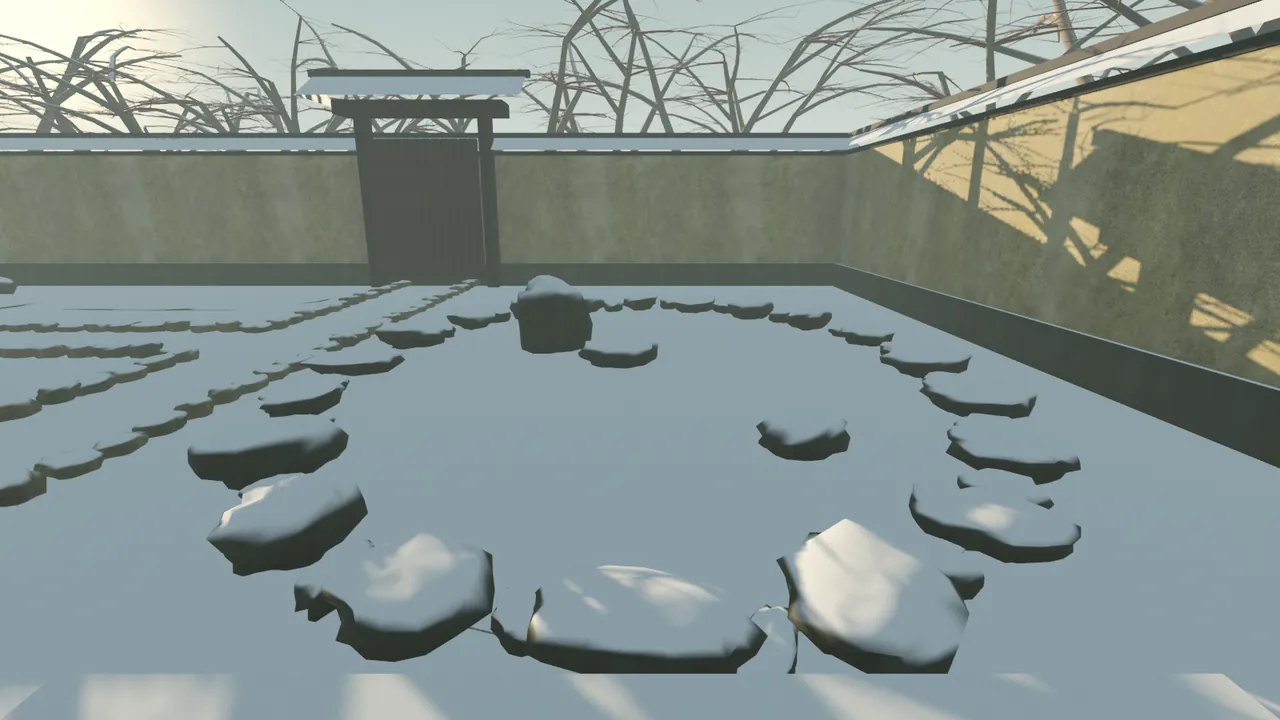
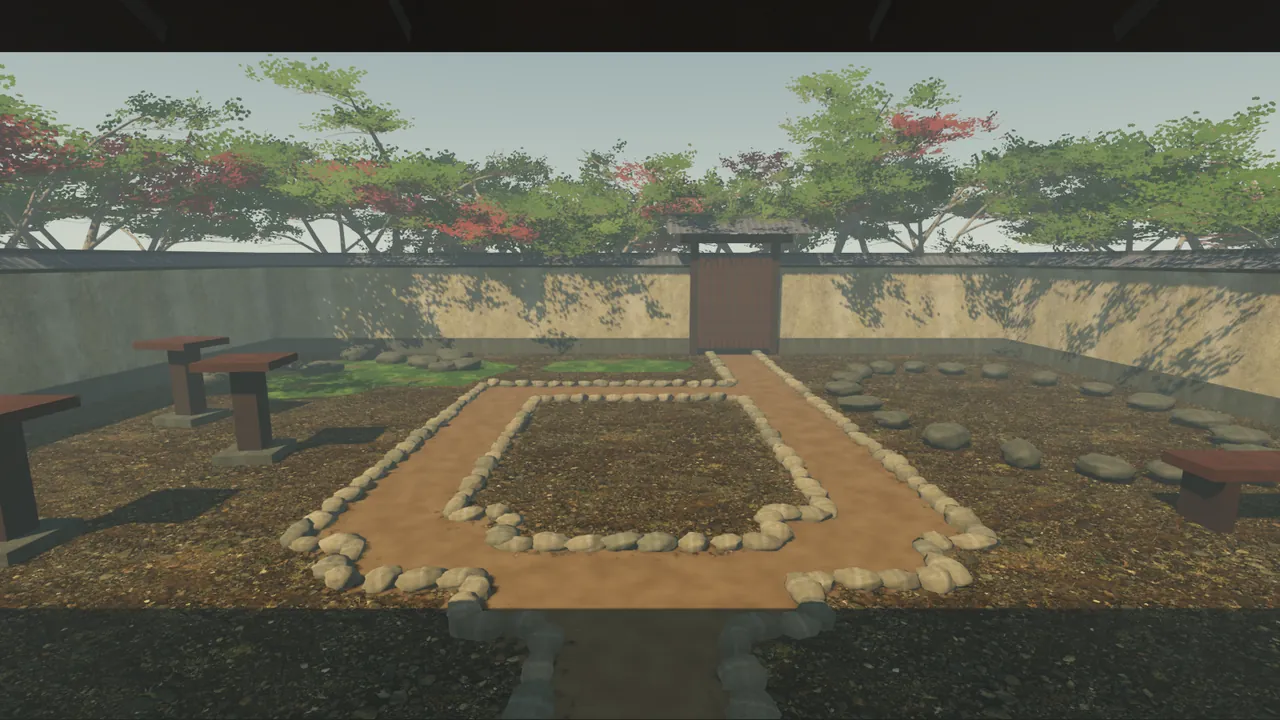
The sun by the hour
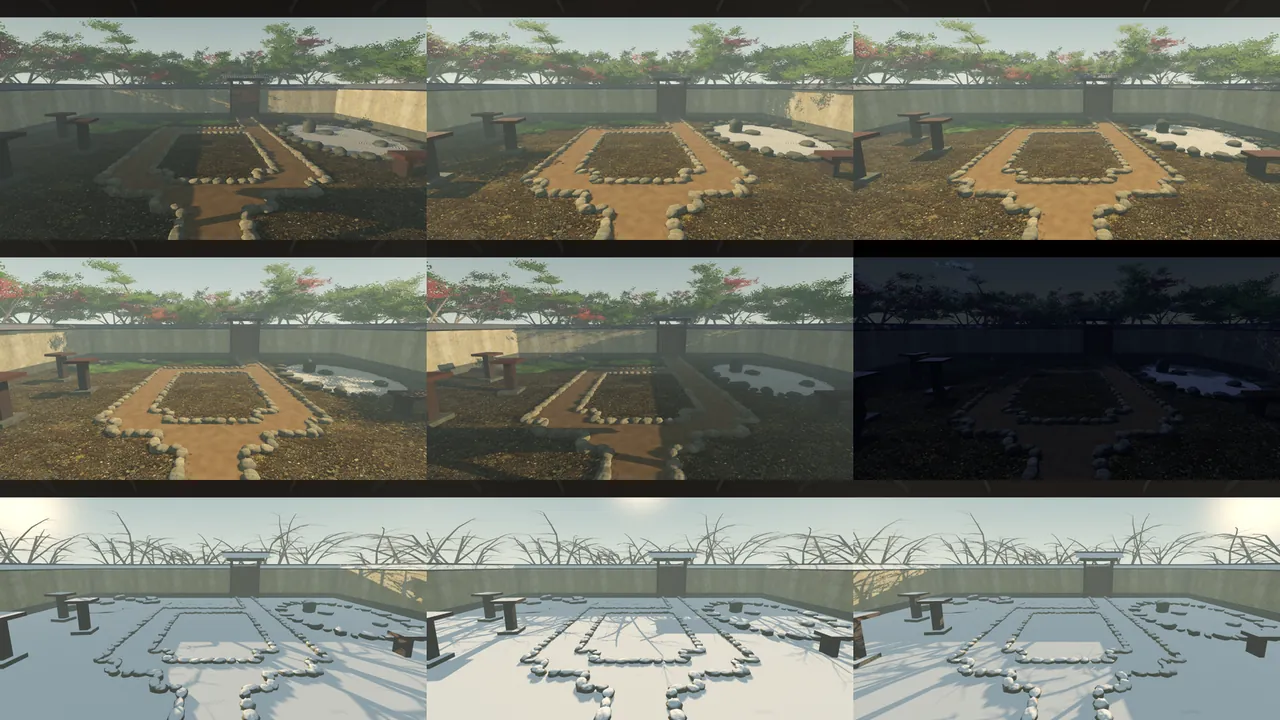
The courtyard's sun stood still: 46 degrees up whatever the hour, so an evening was a dim orange light from overhead with midday shadows. It now crosses the sky with the hour and the season: east in the morning, due south at noon, west in the evening. It rises and sets at the game's own dawn and dusk. The game's day lengths, 8.5 hours at midwinter to 15.5 at midsummer, are the sun's at about 45.6 degrees north, so the light and the brightness always agree about whether it is day. Below 8 degrees the sun is held at 8 until it sets, and at night the dim blue light comes from the moon.
The grow-room window and an outdoor tree's bench keep a picture of the courtyard; they now take a new one each half hour of the sun's crossing.
| Hour | 16 July | 16 January | Before (every day) |
|---|---|---|---|
| 06:00 | 15 degrees | below the horizon | 46 degrees |
| 09:00 | 46 degrees | 12 degrees | 46 degrees |
| 12:00 | 66 degrees | 23 degrees | 46 degrees |
| 15:00 | 46 degrees | 12 degrees | 46 degrees |
| 18:00 | 15 degrees | below the horizon | 46 degrees |
The table gives the sun's height above the horizon as the game now places it. On the review: "Right direction: carry on".
A day in the courtyard
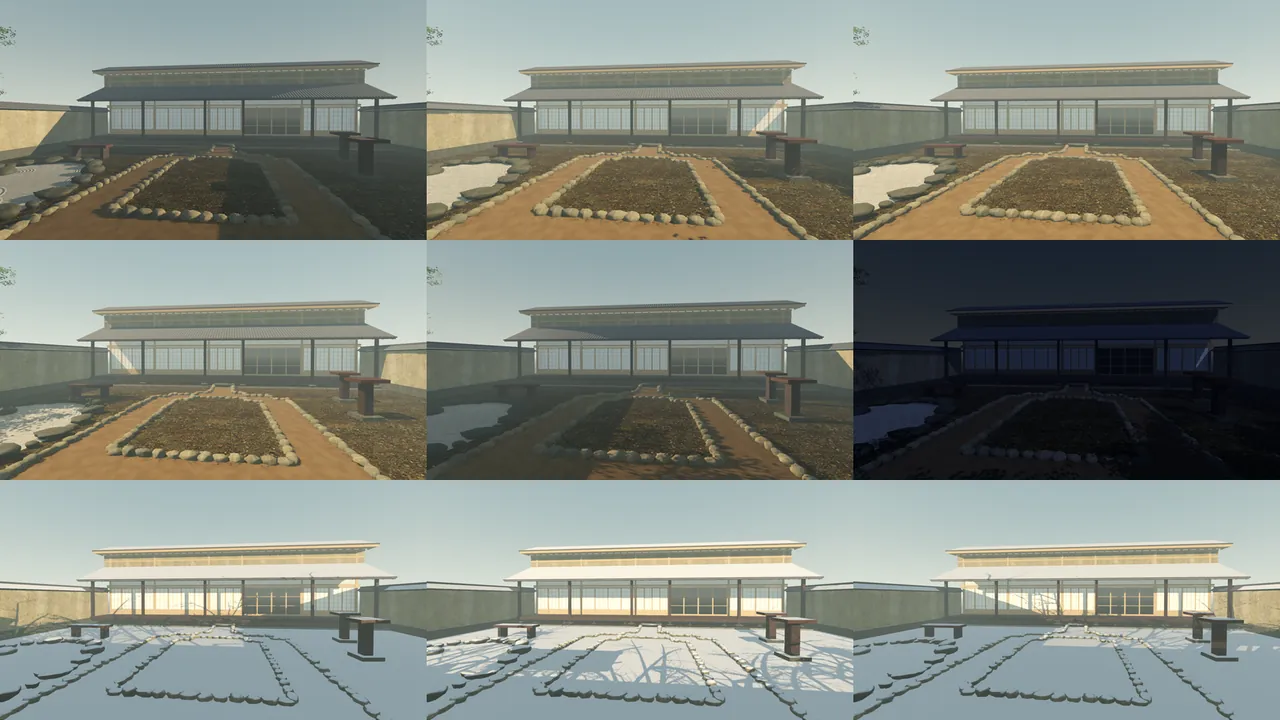
The same two views through a July day and three hours of a January one: from the veranda, and from the gate looking back at the house.
Which side the sun crosses
A moving sun needs a compass. The house stands on the courtyard's north side, as a Japanese house usually meets its garden: the veranda faces south, the low winter sun reaches under the eaves onto the screens while the high summer sun does not, and the sun crosses over the gate.
The first version kept the old sun's side, with the house to the south, and January showed the cost: the house's shadow covered nearly the whole courtyard all day. Through that shadow ran thin bright streaks. The house was one wall deep, and the low sun shone straight through its glass doors and between its screens onto the snow. The house now has a body behind its front that casts shadow and is never drawn.
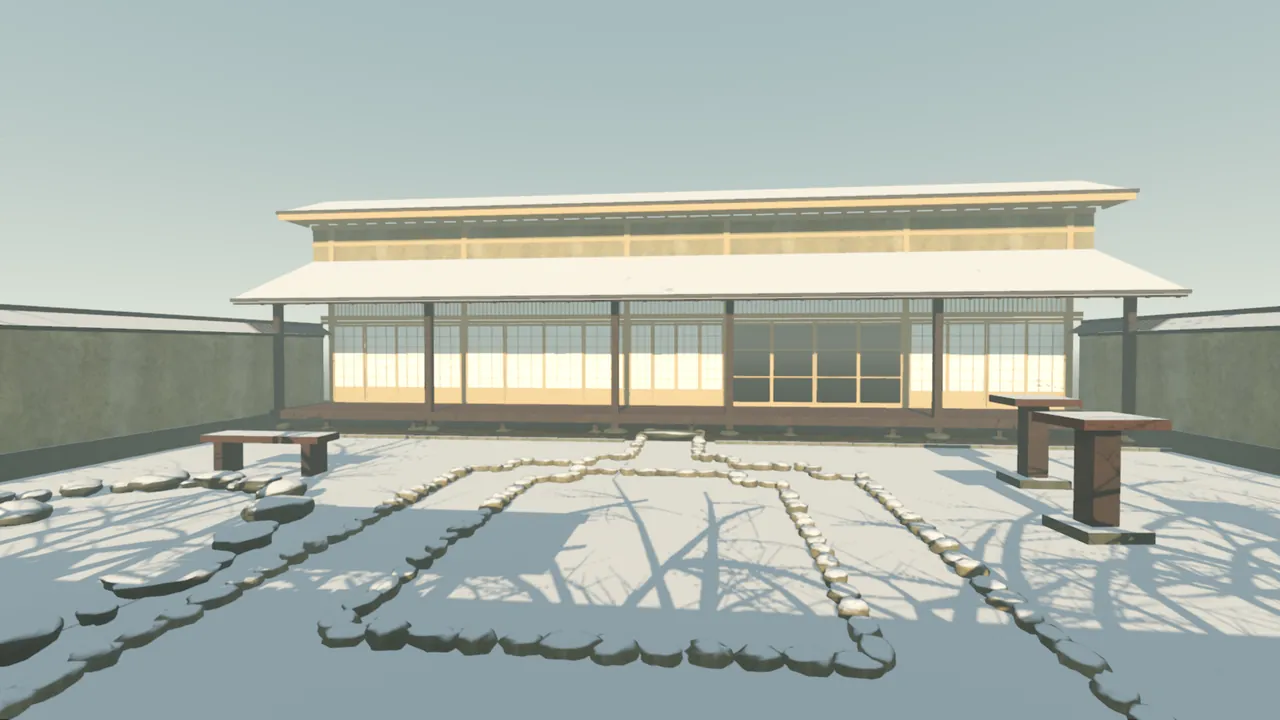
On the review the choice was the sun over the gate, as built.
What it costs
The benchmark's courtyard, with three dense trees, takes about a millisecond more a frame on this PC. Switching the pond off did not bring it back, and neither did turning the compass. The only other change in that view is the sun's angle at the benchmark's hour (09:00, where the old sun never stood), so by elimination that is the cost: the dense trees' shadows fall across more of the view and are drawn into more of the shadow map. It is not measured on a weak graphics card yet.
| Median frame on the development PC | Courtyard, three dense trees | Tree on the bench |
|---|---|---|
| Before (run 20261014-152909) | 3.39 ms | 3.35 ms |
| Now (run 20261014-162045) | 4.33 ms | 3.16 ms |
| Now, the pond switched off | 4.72 ms | 3.08 ms |
| Now, the sun crossing over the house | 4.54 ms | 3.06 ms |
Two checks that fell over
Neither had found a new fault. One compared a living tree's bark outdoors with a dead tree's indoors (a dead tree goes back to the grow room); that only agreed while the outdoor light was kind, and under the new noon sun the living trunk stood in its own canopy's shade. It now draws every state in the grow room. The other compared pictures with and without mesh detail reduction, taken eight frames after the light was set, before the frame had settled. It now waits, and reads 0.92 of 255 against its limit of 1.5.
What's next
- The courtyard's look is closed for Early Access: from here it changes when playtests show something.
- The garden layout's open list, with a rectangle tool if players ask for one.
- A new playtest package when the next milestone wants one.
What I learned
A placeholder can hide what is missing behind it: a house front that never had to stop the sun looked finished until the light came from behind it. A layer added to make one case look right, like the bark collar for living branches, goes on drawing in cases it was never meant for, so when a new state appears, list every layer still drawn over it. And when a fixed input starts to vary, ask of each check that compares pictures whether it still compares like with like.
Sources & development context
Based on House of Bonsai's source history and notes from 14 October: the check runner's records (runs 20261014-140632 to 20261014-162045), the study captures (windowed runs on the development PC at 1600 by 900; the jin bases and the plan are crops, the house front pictures come from the review at 1100 by 619), the sun's positions as the game's own model computes them, and the benchmark's frame times. These are game captures and model outputs, not field measurements.