Sonaris · Retrospective

Change the character without changing the hit circle.

Mouse Meadow and three circular skins explore a different look while preserving the dash game's underlying geometry.

Results

September 7, commit 11853a5: the source and built test suites each passed 506 landscape, 4 portrait-touch and 501 portrait-desktop assertions with no failures, and a local check found identical gameplay over 120 seeded frames in all five skins.

Public Netlify playtest captured September 13, 2026.

A mouse made out of light

Mouse Meadow replaces the space setting with grass, clover and pollen.

The mouse stays attached to the same gameplay circle as the player. Its ears and a constrained tail react to acceleration and turns. Reduced motion uses a steadier pose.
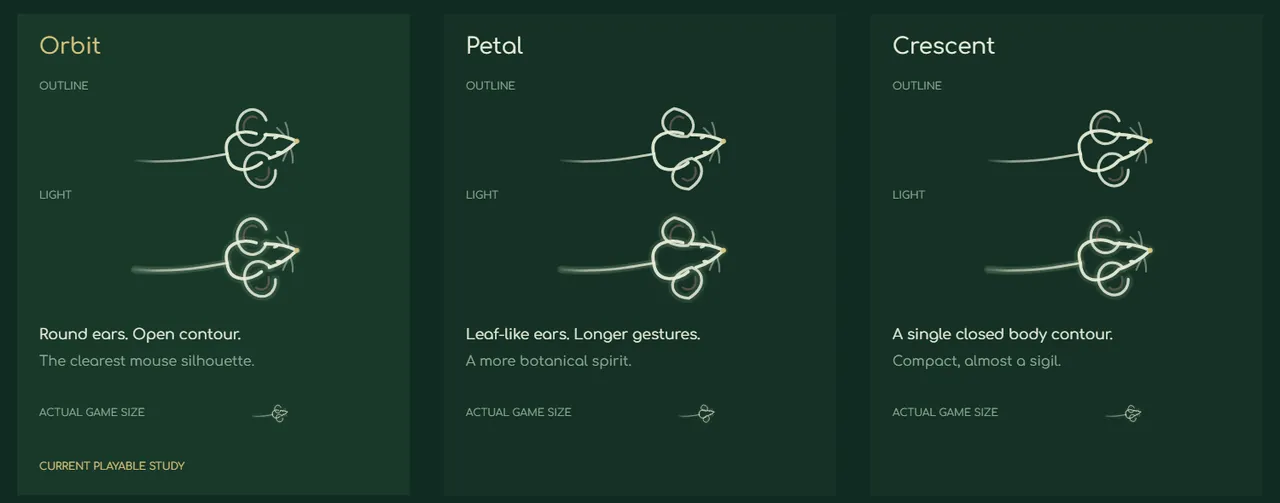
Three line-drawn mice on dark green cards labeled Orbit, Petal and Crescent, each shown as a plain outline, as a glowing light version, and at actual game size.
The first outline mouse. Comparison sheet from the repository's skin notes, committed September 7, 2026: three outline forms drawn with the game's mouse renderer, enlarged and at actual game size. Orbit was the playable one. Feedback found it too small, and it was replaced later that night by the mouse below.
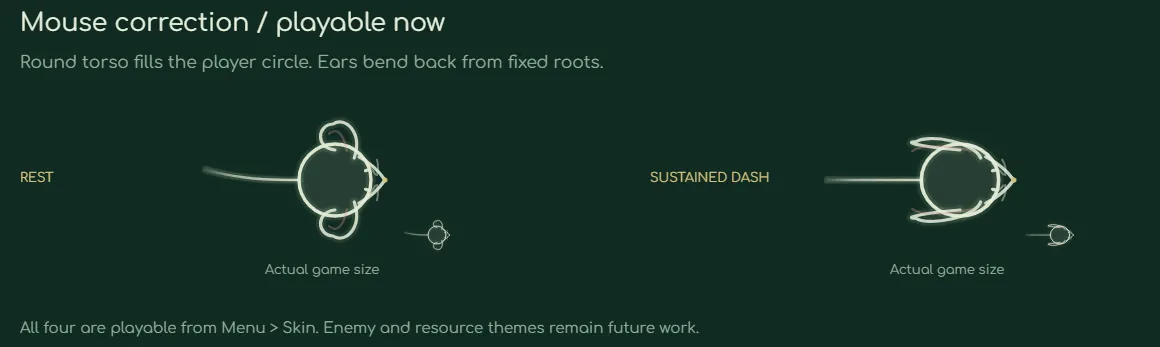
A line-drawn mouse whose round body fills a circle, shown at rest with its ears out and in a sustained dash with its ears swept back, each beside a tiny actual-size version.
The playable mouse. From the skin study sheet committed with the circular skins on September 7, 2026: the round torso fills the player circle, and in a sustained dash the ears bend back from fixed roots. Drawn with the game's renderer on a comparison sheet; this is not a gameplay screenshot.
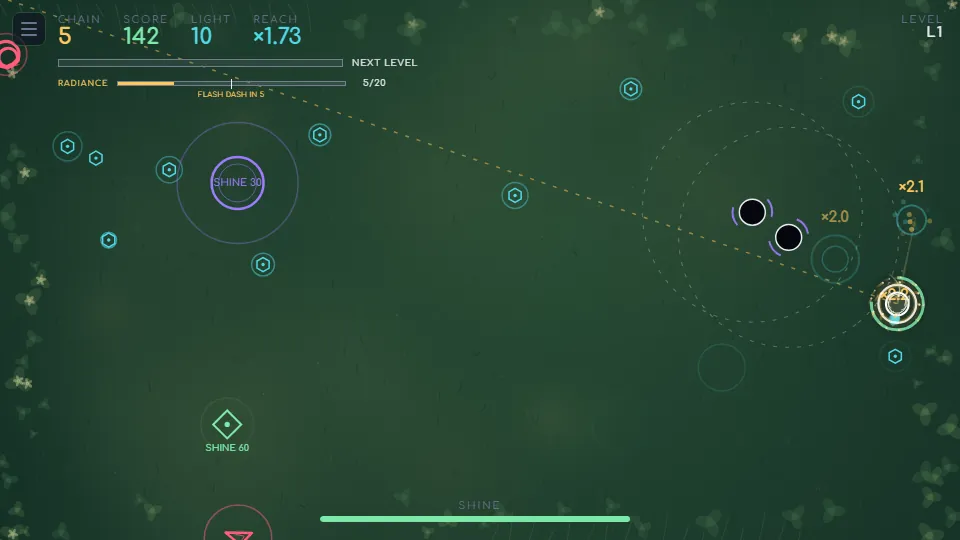
Sonaris in play in the clover meadow skin: the glowing player orb on the right, shine targets and a dashed light path across a dark green field.
In play, the meadow skin in the built game, 7 September (a local check capture from that night).

One framework, several materials

Dewdrop, Ember and Glass Marble reuse one circular cosmetic renderer with different highlights and trails. All three are selectable prototypes, and none is a paid unlock.

The work tests how much character can change while the rules, boss colors and scoring stay shared.
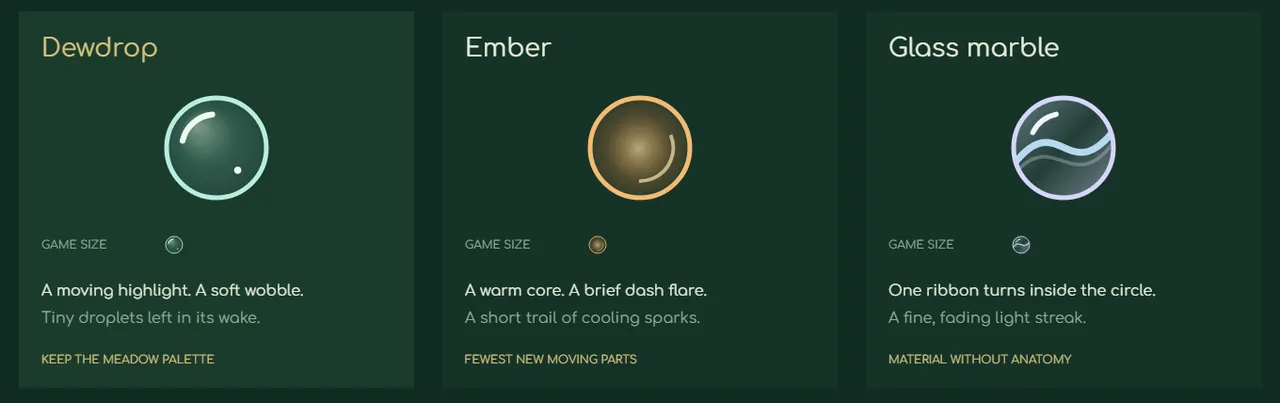
Three dark green cards showing circular player skins: a pale green dewdrop with a bright highlight, an amber ember with a warm glowing core, and a lavender glass marble with a wavy ribbon inside, each beside a small game-size version.
Dewdrop, Ember and Glass Marble. Skin study sheet committed September 7, 2026. Each orb is drawn by the game's own player renderer after a short simulated dash, shown enlarged and at game size. A comparison board, not a gameplay screenshot.

Keep the play link current

The portfolio now points to the Netlify playtest the studio uses.

The project notes keep that build separate from a locally prepared itch.io package, which had not been uploaded.

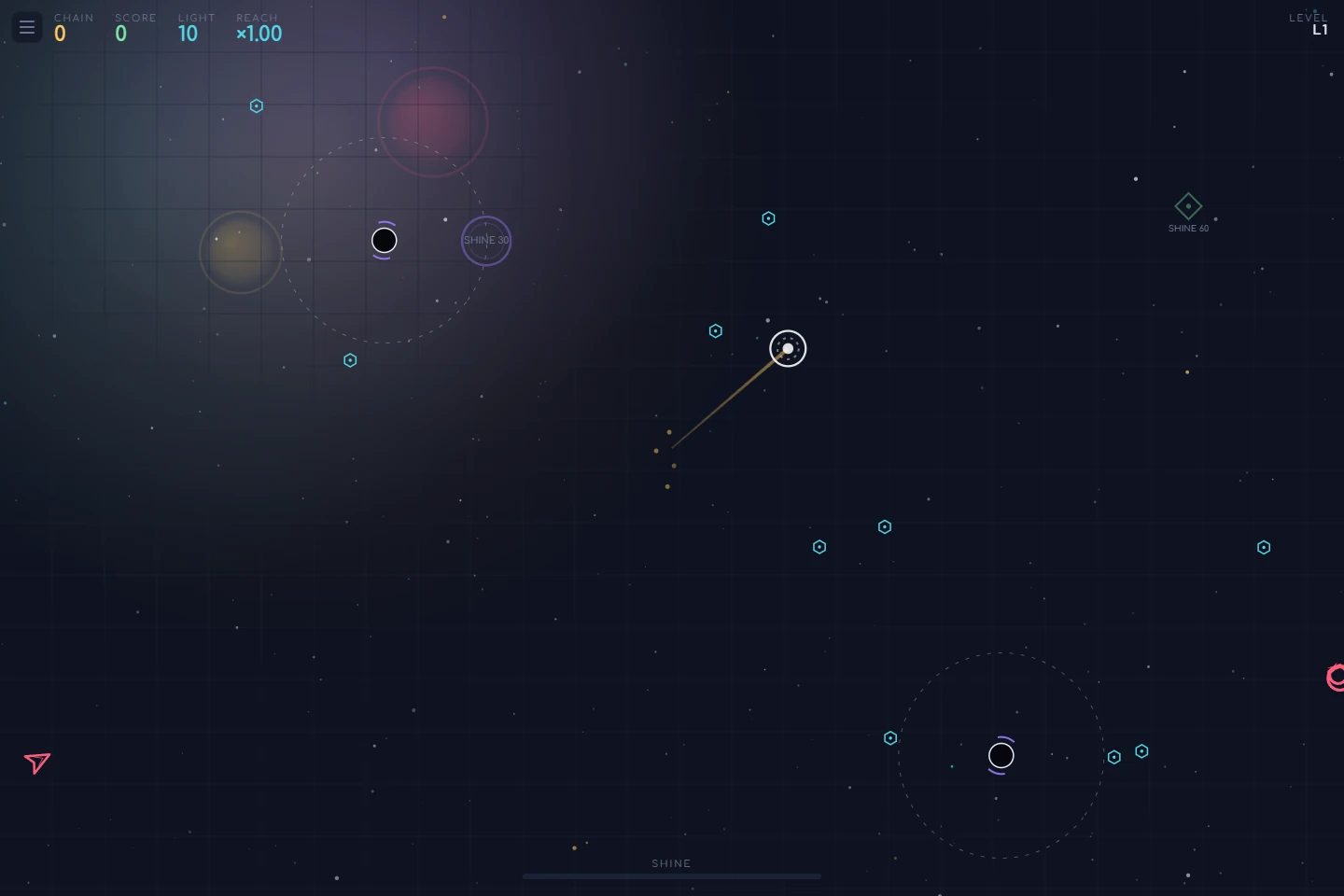
The refreshed screenshot at the top of this page comes from the public playtest. Difficulty pacing still needs human tuning.

What's next

  • Human tuning of difficulty pacing.
  • Uploading the locally prepared itch.io package.

What I learned

Cosmetic motion should stay attached to the player's real collision shape. A different silhouette can add character without quietly teaching a different rule.

Sources & development context

Sonaris README, docs/skins/CIRCULAR-SKINS.md, docs/skins/README.md and commit 11853a5 (September 7). Public untagged Netlify playtest captured September 13, 2026. The retained notes do not establish that the latest package is on itch.io. Figures are cropped from the skin comparison sheets docs/skins/mouse-meadow-direction.png (commit afb638e) and docs/skins/circular-directions.png (commit 11853a5), both September 7. Test counts are from HANDOFF.md at commit 11853a5.

This retrospective separates the original work date from publication. Historical test results are not claims of a new test run.

All Sonaris posts